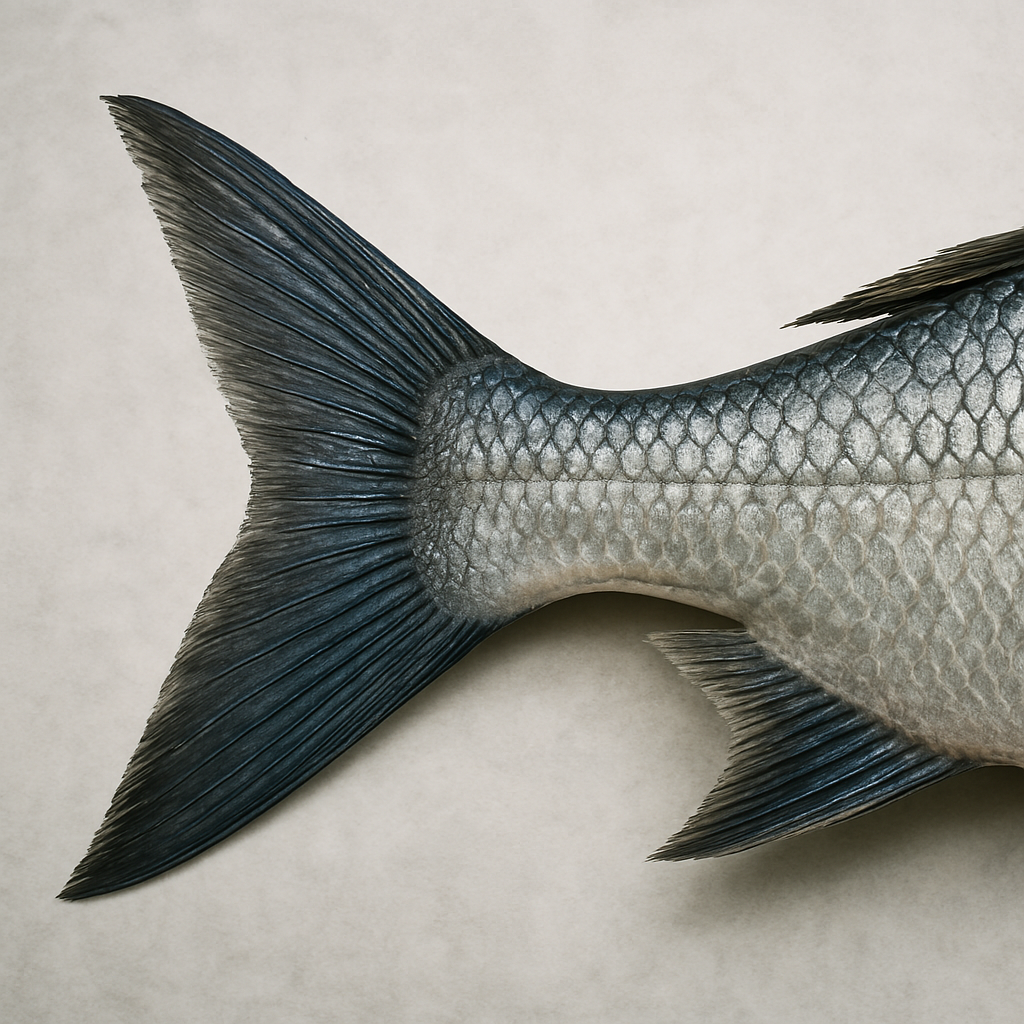
Caudal fin is the tail fin of a fish that is located at the posterior narrow end of the body (caudal peduncle). The word “Caudal” comes from the latin word “cauda” that means tail. Among all fins only caudal fin is connected to the vertebral column of the fish body. Caudal fin is used for propulsion as well as side-side thrust during forward movement.
Types of Caudal Fin in Fishes –
Based on their shape caudal fins are categorized in different types, namely pointed, rounded, truncate (square), emarginated, forked, lunate and heterocercal etc. The shape of caudal fin corresponds to the power of propulsion; it also acts like a rudder to help in change of direction while swimming.
Caudal Fins as Indicator of Ecological Adaptations:
Fish shape and anatomy helps us discover information about how a fish moves, where and how the fish lives, and how it has adapted to its environment. The shape of a fish's caudal fin indicates how the fish moves and lives as well. Pointed caudal fin like that in Catfishes and Sharks are effective in making thrust and variable speed and acceleration. They also use the pointed caudal fin to stun the prey. A rounded or truncated caudal fin like that in Killifish, Minnow, Snakehead, Trout, Salmon etc is good for maneuverability and short bursts of speed. This kind of caudal fin is commonly found on fishes living in coastal embankments, river mouths and riverine systems. A forked shaped caudal fin like that of Catla and Striped Bass is good for maneuverability and speed over longer distances. Lunate or crescent shaped caudal fin like those found in Tuna and Swordfish allow for great speed over long distances and are usually found on fish that live in the open system.