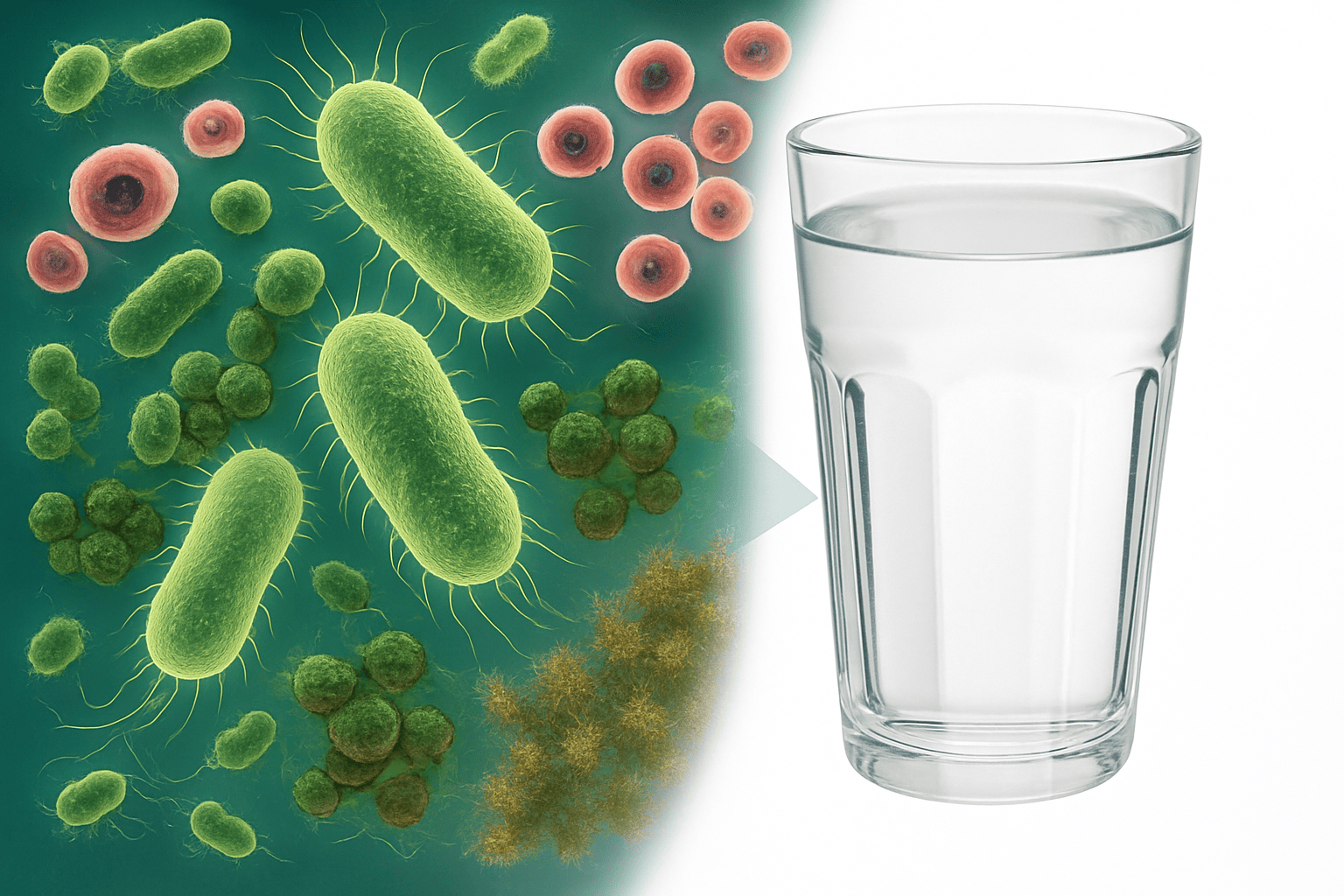
E. coli is type of fecal Coliform bacteria that are commonly found in the large intestine of human beings and other warm-blooded animals. Presence of Coliform bacteria in any form of surface and ground water is strong indication that it is contaminated with sewage or fecal matter of humans and/or animals. The Coliform bacteria are transmitted to humans through contaminated water or food, raw meat, raw or contaminated vegetables etc. After ingestion they can cause severe health hazards like diarrhoea, abdominal cramps, bloody diarrhoea or very acute health hazards like acute renal failure, decline in blood platelets, neurological stroke and coma. Coliform bacteria are destroyed in water and food if heated at temperature of 70° C or above. The unit for expressing presence of Coliform bacteria in water is most probable number (MPN) per 100 ml (MPN/100 ml). The World Health Organization (WHO) standard specifies zero count of E. coli in drinking water. The Central Pollution Control Board of India (CPCB) prescribes permissible limit of Coliform bacteria in drinking water be 50 or less MPN/100 ml.
There are different methods of qualitative and quantitative estimation Coliform count in water. The simplest and quickest method for detecting its presence is the vial culture test in which the sampled water is cultured with a pre added growth media in a vial for 24 hours at body temperature (around 36° C). The appearance of turbid pink/red colour and its darkness will give an idea of how severe is the contamination of Coliform in it.