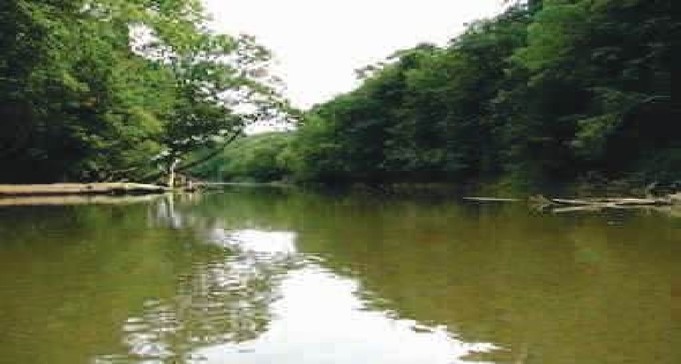
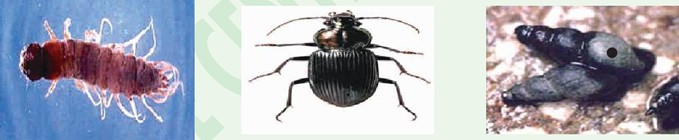
Benthic zone organisms (Benthos) live in the bottom zone of aquatic environment. The aquatic environment includes standing or running, fresh water or marine in the form of pond, lake, stream, river, sea, marsh etc. Benthos would be found in their various life forms that are categorized broadly in three types according to their distribution in the bottom as, Endobenthos (burrowing in the bottom mud), Hyperbenthos (crawling over it or swimming) and Epibenthos (sedentary at a place). Benthic organisms include plant species (phytobenthos), animal species (zoobenthos) and microbial forms as well.
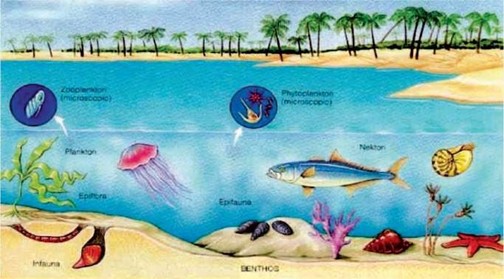
Image: Benthos in a Water Body
Why Benthos are important? Benthos are very important constituent of aquatic ecosystems making part of the food chain and food webs, biogeochemical cycles, trophic structures, energy flows and various other ecosystem functions. Benthic organisms living in deep zones tend to feed upon the dead organic matter that sinks down to the bottom and thus play important role in recycling of nutrients and keeping the aquatic environment clean.
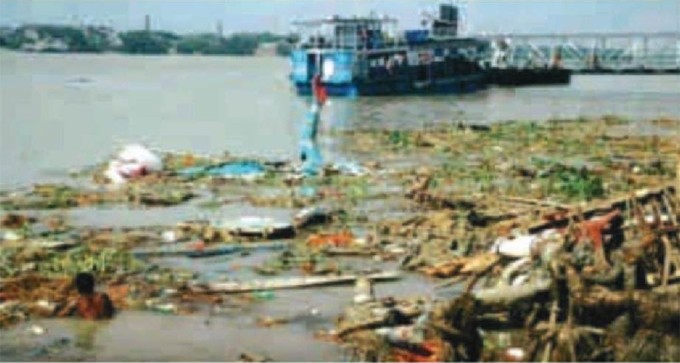
Benthos as bioindicator: Benthos also acts as a bioindicator of the health of aquatic environment through their presence or absence indicating the cleanliness / pollution of the aquatic habitat.
Here we are describing the activity as how we can collect and examine various types of Benthos and understand their diversity in our water bodies.

â— Mud sampler (Khurpi or shovel),
â— Sieve (2.0mm & 0.5mm mesh size),
â— Bucket,
â— Magnifying Glass,
â— Collection bottles,
â— Forceps,
â— 70% alcohol (Preservative)
Mark a measured spot in the bottom zone in a water body and collect sediment sample from it by a mud sampler.
1- Take the Sample in a bucket, note its volume and add water to it.
2- Sieve out the sample through 2mm & 0.5mm mesh size sieves, one after the other respectively.
3- Collect the micro and macro invertebrates from the sieves with the help of forceps and transfer them to a wide moth bottle containing 70% alcohol.
4- Transport residual organic materials retained in the sieve, to the laboratory and add 50ml - 100ml of water to it.
5- Dissolve 5 gm of sucrose in it (sucrose helps the benthic organisms to float on the water due to change in the density of the medium, that makes easy to collect them for further process)
6- Fix the organisms in 70% alcohol to preserve.
7- Identify the species and estimate the number of organisms species-wise, their total number, and make inference on the basis of quantitative and qualitative analysis.
â— You can make a record of the benthic organisms collected from different water bodies, their identification, number in the sample, aggregate number of benthic organisms collected form respective water body etc.
â— An example of data table is given here; you can design your own data table as per need.
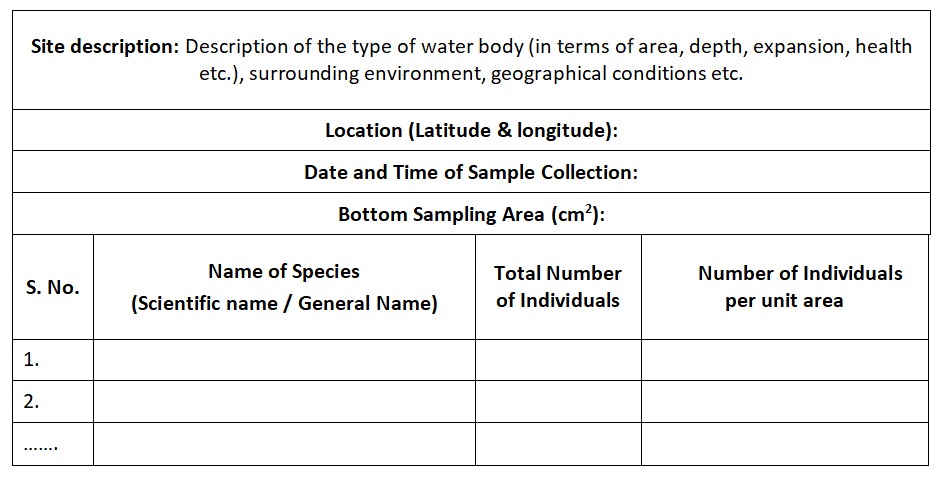
Qualitative and Quantitative Analysis:
â— Identify the organisms using keys & monographs.
â— Count their number species-wise in the sample and note down.
â— Calculate the number of organisms per unit bottom area species-wise and for total benthos
Total number of individuals counted from the sample
Individuals of a Species per Unit Area = ————————————————————————
Bottom sampling area
Total number of Benthos counted from the sample
Benthos per Unit Area = ————————————————————————
Bottom sampling area
â— Present your results regarding species of benthos identified from the sample and their individual populations as well as total number.
â— You can present your result through mathematical and statistical calculations of quantitative and qualitative data.
â— You can also analyse the data in reference to the spatial and temporal variations and habitat characteristics.
â— The bottom of aquatic bodies also hosts various life forms that are termed ‘Benthos’ (i.e. bottom dwelling organisms)
â— Benthic organisms include plants, animals and microbial species
â— Benthos have species-wise distribution pattern in the bottom (Hyperbenthos, Endobenthos, Epibenthos)
â— Benthos are an important ecological indicator of the health of water body
â— Do benthic organisms do respiration? How do they get the required gases?
â— When it is very difficult for us to go under the sea beyond a limit because of the very heavy pressure of the water column, how do benthic organisms in deep sea zone able to bear the heavy pressure of the water column above them?
Studying Benthos (or benthic organisms) is important to understand how aquatic ecosystem works. Often these animals occur in high numbers and with biological diversity, which lead us to think they play an important role in the energy (food) flow through the aquatic ecosystem.