A fish scale is a small rigid plate that develops from the mesoderm (layer between epidermis and the underlying tissues) of fish skin. Scales are primarily meant for protection of fish body and apart from that scales also help them in camouflaging and movements in water. Scales grow on a fish in overlapping plates, in a pattern that the free end of the scale points towards the tail.

Image: Overlapping Pattern of Scales on a Fish

Image: Picture Showing Overlapping Pattern of Scales in Catla Fish
Fish scales are categorized in four major types – Placoid, Ganoid, Cycloid and Ctenoid. Placoid scales do not grow in size but grow more in number as the fish size increases. Ganoid scales grow in size as the fish ages. Cycloid scales increase in size as the fish ages and that is visible in the form of rings made in scale. Ctenoid scales also increase in size as the fish grows and the growth is manifested in the form scale rings. The pattern of growth rings made in the scale also reflects the environmental conditions in which the fish grows.
The structure of scales is useful in broad classification of the fish groups. Placoid scales are characteristic of fishes having cartilage (a tough elastic tissue instead of bones), ganoid scales are found in the primitive bony fishes, while the cycloid and ctenoid scales are characteristics of higher bony fishes that we have mostly at present.
Here we are going to discuss activity through which we can examine the formation of scales and growth rings made in them and also try to infer the age and growth of fishes as well as environmental conditions prevailing in their habitat.
â— Plain glass slides,
â— Cello tape,
â— Sticker for labeling,
â— Marker,
â— Forcep,
â— Watch glass,
â— Tissue paper.
A.Collection of fish Scales and slide preparation-
1- One can generally collect fish scales from the local market. For better scale sample select the lateral abdominal side of the fish body and remove scales with the help of forcep. Take at least 2-3 scales for better study and observations of scale characteristics.
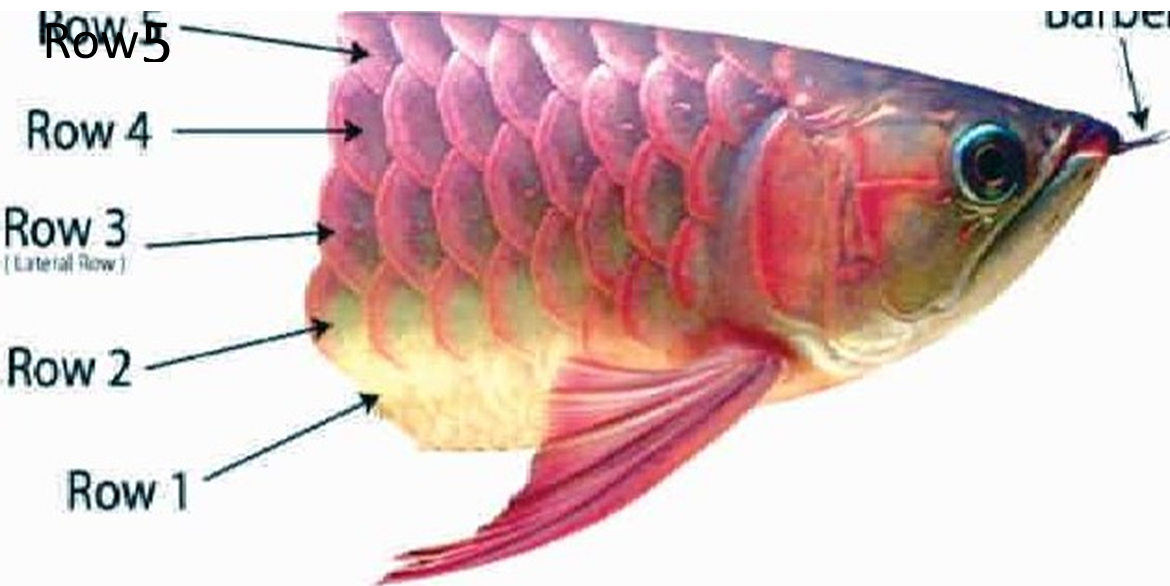
Image: Places on the Fish Body from Where Scales can be Collected
2- Wash the scale with water 2-3 times so that the mucous stuck to the scale is removed.
3- Take the glass slide and clean it with the help of tissue paper
4- Place the fish scale on the glass slide in horizontal position and cover it with another glass slide.
5- Wrap the slide ends with the cello tape so that the scale is fixed between the slides
6- Label the slide with date & time and place
Note - The slide preparation can be done at the sample collection site (i.e. at the market shop or at the water body etc). If you find any recently dead fish at a natural site, you may also collect scale sample in the same way.
B. Age determination of fish by scale annuli counting-
1- For age determination, few scales are removed from the side of the body just below the origin of the dorsal fin. In the fishes having soft-rays scales are taken from the region above the lateral line but in the fishes having spiny-rayed fins, scales located below the lateral line are preferred.
2- The scales are first soaked in a weak solution of caustic soda for 10-15 minutes. Subsequently, they are washed and mounted.
3- Temporary and permanent mounts can be made for age determination.
4- The temporary mounts of cleaned scales are made wet or dry. The mounts are best when the scales are held between two slides for some time in order to make them completely flat.
5- The wet process includes mounting of scales in glycerin.
Like tree stems fish scales also have annual growth rings and the formation of rings also indicates the environmental conditions. For example, closely crowded bands in scale indicate winter periods of slow growth just as do the similar bands of tree stump.

Annual Growth Rings in Fish Scale Annual Growth Rings in Tree Stem
Note - Examination of fish scale can also be done for age and growth to determine and prepare records for maturity, age-related growth rates, survival/mortality rates (longevity), population age structure etc.
â— Age Determination of Fish by Scales – As shown in the picture below, carefully examine and identify the annuli formed in the scale, to determine the age of fish -

Image (A): Determination of Age of Fish by Examination of Scale Annuli

Image (B): Determination of Age of Fish by Examination of Scale Annuli
â— Record of Scale type and annuli rings count – A data table can be designed for recording the scale types and the number of annual rings formed in them. Here and example of data table is given -
â— A general account of the fish diversity, species list, scale types, annuli count and age, and photographic or sketch illustrations can be prepared and presented.
â— You can make inference through mathematical and statistical calculations and present your data accordingly.
â— Photographic and/or hand-made sketches of fishes, their scale patterns, scale structure, annuli pattern etc can make a good impact.
â— Fish morphology
â— Scale anatomy
â— Scale annuli counting and age determination of fish
â— Inference of stress condition by examination of scale annuli pattern
â— Scales study for categorization of fishes in different way
â— Do all fishes have scales? How do fishes not having scales manage survival and activities?
â— Why scales are peeled off before cooking the fish?
Uses of Scales: Fish scales can be utilized to make different kinds of items like jewellery items. Some examples of jewellery items prepared from fish scales are shown here

Dry Fish Scales for Making Jewellery Fish Scales Earrings Fish Scales Flower