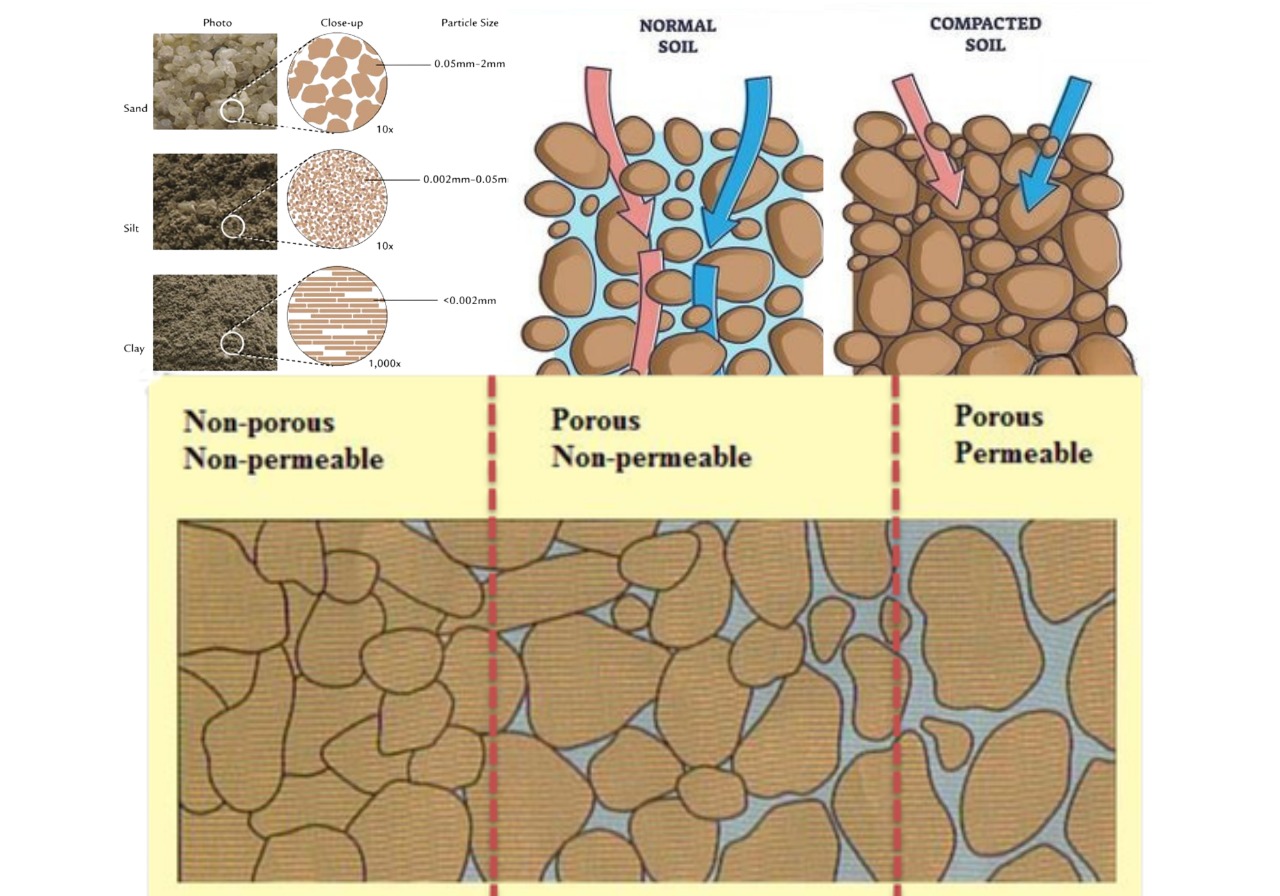
Soil porosity is the amount of space available between soil particles. Pore spaces are formed due to plant roots, movement of soil organisms, burrowing animals, expansion of gases within soil, dissolution of the soil parent material etc. Different sized pore spaces in soil directly affect the water holding capacity (i.e. ability of spaces to hold the water) of soil. More the porosity lesser will be the water holding capacity, consequently more loss of soil water through evaporation, dryness in soil and poor availability of soil water to plants. The seepage and recharge of underground water is also affected by the porosity of soil.
Water that is kept hold in soil pores against of gravity is called capillary water, is the main source of water to the plants. Soil pores also contain air that helps in availability of Oxygen to plant roots to perform respiration. Soil porosity supports plant growth and activities of living soil organisms in many ways.
Soil structure, soil texture and soil organic carbon directly affect the pore space. Well aggregated soil will have more spaces as compared to single-grain or less structured soil. Clay and clay loam soil will have greater pore space than sandy soil. Addition of organic matter increases the volume of pore space in soil. Intensive agriculture reduces the soil porosity as compared to fallow soils. Loam soil or loamy content in soil is best suitable for adequate soil porosity that retains capillary water, air and spaces for growth of plant roots.