Soil pH is the measure of acidic or alkaline nature of soil. Soil pH is an important character that influences the nutrient dynamics and biological processes in the soil. Soil having pH less than 7 is called acidic and for more than 7 is called alkaline. Soil pH from 6.0 to 7.5 is considered optimum.
Soil pH is normally measured in a soil water suspension. The acidic or alkaline nature of soil can be easily tested in the field with the help of a litmus paper (which is a filter paper that is treated with natural-soluble dye obtained from lichens), whereas to ascertain the range or value of acidity or alkalinity standard pH paper strip (which is a paper treated with mixture of indicators) is used.
Basic Concept of pH
â— pH of Neutral Solution – If the pH of a solution is 7, it will be a neutral solution. Such solution shall not react with litmus or any other liquid indicator.
â— pH of Acidic Solution: All acidic solutions have pH less than 7. Therefore, whenever the pH of a solution is less than 7 it will be acidic in nature and it will turn the blue litmus to red, and will cause liquid indicators, methyl orange turn to pink and phenolphthalein to colourless.
â— pH of alkaline solution: All alkaline solutions have a pH greater than 7. Therefore, whenever the pH of a solution is greater than 7 it will be alkaline in nature and will turn the red litmus to blue, and will cause methyl orange turn to yellow and phenolphthalein turn to pink.
â— pH paper strip,
â— graduated glass beaker (alternatively you can take any clean small vessel of glass or metal having at least 100 ml volume).
1-Take about 10 gram of soil sample in the beaker and add 50 ml of distilled water in it,
2- Shake the solution well for two minutes,
3- Place the beaker at a flat surface for at least 15 minutes to let its soil settle down,
4- After settling of soil, take out the supernatant (soil water suspension) in another beaker (or alternatively other container) in a way that the settled soil does not get moved and remains in the first beaker.
5- Take some amount of supernatant and dip a pH paper strip into it and take out immediately and let it dry for few seconds for any change of colour
6- Observe the change in colour of pH paper and match it with the colour scale printed on the pH paper strip booklet.
7- The pH of sampled soil will be corresponding to the pH value printed on pH booklet with which the colours of tested pH strip matches.

Figure: Change in Color of pH Strip in Soil Solution
â— Use reference range of pH to determine the nature of respective soil sample as following
pH 7 - Neural,
pH less than 7 - Acidic,
pH more than 7 - Alkaline
â— Record the observed pH value of each sample and the inferred nature of the sample in the data sheet.
â— A sample of data table is given here, you can design your data table according to the additional information you want to record with the pH values.
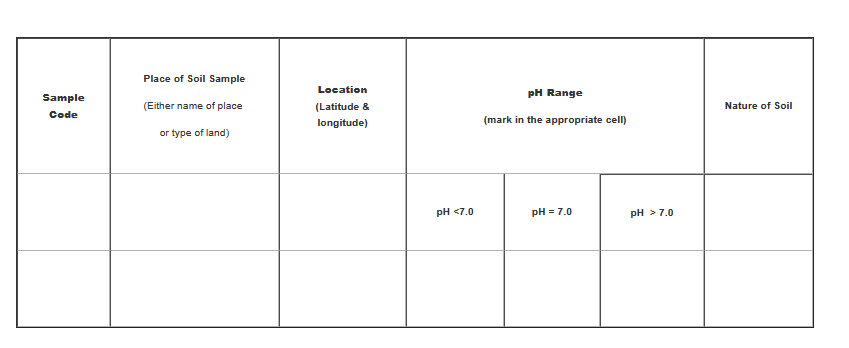
â— Derive your results regarding pH value observed for different samples and other interpretations based on additional data/information compiled.
â— Photographic evidences of the landscape surrounding the sampling site will be useful for further reference.
â— Concept of soil pH and related acidic or alkaline nature.
â— Classification of soils based on acidic, alkaline and neutral nature.
â— The neutral, acidic or alkaline nature of soil differ in different sources of soils such as alluvial soil, farm soil, road side soil and pond bed soil, forest soil etc.
â— Why distilled water is used in making soil solution? Why not water taken from any source is used?
â— What is the reason for different pH value of soils?
â— What would be the effect of variation of soil pH on crop pattern?
â— Can you maintain or alter the soil pH? If yes, try out and present. For how long the altered pH can be maintained?