Activity based learning or in other words action research is helpful in promoting children and other curious learners to be inquisitive, observant and innovative thinkers. Apart from being helpful in development of knowledge in children in playful way, activity based learning also helps in developing social skills in learners as well as practitioners through the process of planning, designing, organizing, group work activities, discussions, communication, logical arguments and mutual cooperation. It also helps in construction of knowledge in learners about the facts through hands-on experience instead of rot learning of textual information given in books.
Interest leads to attentive minds and this helps children in learning the facts in accordance to their pace and time taken to learn, without putting any stress of time and pace at which they learn. International Bureau of Education, the UNESCO Centre of Excellence in curriculum and related matters has also stressed on concept of Child Centric Approach i.e. placing the child at the notional centre of the learning process in which they are active participants based on their choices of learning activities.
Founders of the Science Centre (Gwl.) Madhya Pradesh had firm belief that child centric approach needs to be placed at the notional centre of the learning process in which children are active participants based on their choices of learning activities, and started working in science popularization through design & development of activity based scientific programs. In 1988 Science Centre launched People's Science Movement as its flagship program and organised science popularization activities in the most backward areas of Madhya Pradesh to help parents and through them their children to get meaningful direction towards learning of day to day science in interesting way. In the course of People's Science Movement various programmes and activities were undertaken at to reach common masses, school and college communities, these included programs on environment education, nature camps, surveys on status and health of local natural resources, science popularization rallies & marches (Vigyan Yatra), science quizzes, writings, shows & plays, workshops, trainings, seminars, shows on scientific explanation of miracles, use of mass media, folk arts, peoples science festivals, campaigns on local environmental issues, health centered activities and constitution of Children's Science Council's (Baal Vigyan Parishad) in schools etc.
Science Centre also designed, developed and distributed modules and activity kits that would help in developing qualitative efficiency in the curricular and co-curricular learning opportunities along with assuring equity at gender, economic class, social background and geographical reach. Large number of training programmes were also organised for and in collaboration with other organisations in different parts of the country that helped in wider spread of peoples science movement.
During the past two decades the importance of natural environment has primarily being recognized more reposing on to the irreparable changes caused due to destructive anthropogenic activities. Nature has its own mechanisms of indicating its health and responses towards anthropogenic changes. By examining the ecological (natural) indicators one can know the status of various component of nature and can determine whether the component is in good condition or in bad condition. In the study of nature and its components, as per objective and need one can determine the natural indicators which has to be examined. Some broad examples of natural indicators are physico-chemical characteristics of water, air, soil & atmosphere; composition & functions taking place in biodiversity; structural, morphological and physiological characteristics of living organisms; interactions taking place between living and nonliving components of nature; positions of celestial bodies and their effects on functions of biosphere on the Earth etc.
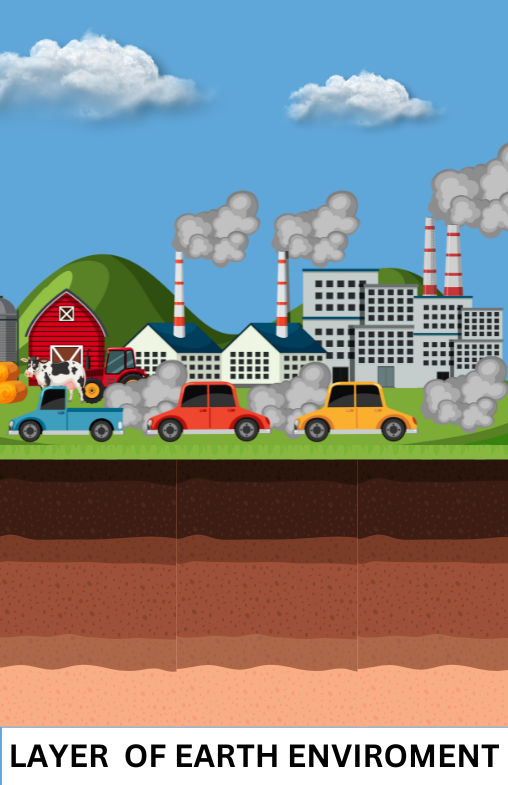
Realising that there is still lack of scientific tool kits which would be useful to study both living and nonliving components of environment, their physico-chemical and biological characteristics, functions & interactions, Science Centre has recently developed the Eco Eureka Kit as a humble attempt to help the young generation as well as interested people to study and examine the nature and its living & nonliving components with easy tools and techniques in stress free playful manner. The kit has assembly of more than 70 tools that are easily available as well as can be assembled easily using local material. The kit is useful to study and examine nature and its components that include Water, Soil, Biodiversity, Earth & Atmosphere and Astronomy.
The Eco Eureka Kit is another addition to Science Centres peoples science movement and child centric approach and would add into Indias contribution in achievement of United Nations Sustainable Development Goal-4 (SDG-4) which aims to ensure inclusive and equitable quality education and promote lifelong learning opportunities for all.
The activity manual of the Eco Eureka Kit has descriptions of 34 activities under 5 thematic sections namely Water, Soil, Biodiversity, Earth & Atmosphere and Astronomy and instructions of performing the activities. The given instructions include procedure of the activity in step-by-step manner (i.e. Concept of the activity, diagram, kit material, method, data collection and analysis, results, key points learned and open-ended questions). The first theme Water contains 5 activities, second theme Soil contains 7 activities, third theme Biodiversity contains 14 activities, fourth theme Earth & Atmosphere contains 5 activities and fifth theme Astronomy contains 3 activities, all activities are described with method of investigating their physical/chemical/biological/ properties accordingly. To help children explore and know more facts about the thematic activities and the science behind them open-ended questions have been given at the end of each activity. Apart from this, lists of suggested activities have also been given to help the users explore more ideas of study & experiments using the kit material and add into the activities.
Apart from its utility in classroom, this kit is even more helpful for children in extra-classroom experimental and exploratory activities without much supervision. They can use this kit as per convenience of time and place. This kit can be used by different aged children as well as elders including teachers and parents. It will also be of interest to amateurs, science clubs, eco-clubs, science based voluntary and non-governmental organizations thinking of child centric nature study activities.
To spread the message of zero waste and recycle of waste the kit box has been made of handmade sheets of recycled paper and clothes. Production of handmade sheets and design and manufacturing of kit box has been done by SADEV Creations, recycled paper manufacturing unit of the Science Centre.
Prakruti Media Shala (The Virtual Platform) -
After successful introduction of the Eco Eureka Kit to the learners and practitioners it was felt that apart from the physical form it should also be introduced in the virtual form so that it can reach to a wider audience and can serve useful as facility for learners and practitioners to learn from it and contribute their activities in it. Therefore, Science Centre has designed this virtual edition of Eco Eurek Kit named as ‘Prakruti Media Shala’ to explore, investigate and experiment to know about the five basic components of the nature Water, Soil, Biodiversity, Earth & Atmosphere and Astronomy. It is based on application of science media, gamification and ‘do it yourself’ methods.
Target Group - The target groups of Prakruti Media Shala are children, teachers, youth, common mass, and society at large.
Objectives of the Prakruti Media Shala include –
* Understanding the basic concepts of Environment that cut across different disciplines.
* To know what ecology, nature and its components are.
* To stress on the fact that awareness programmes related to nature and environment must be action oriented.
* Provide a platform for communication and collaboration amongst target groups.
* To enhance creativity for Eco Scientific Exploration and Eco-cultural Traditions
* To develop curiosity for various natural phenomenon taking place and to satisfy the same through hands- on activities.
* Development of aesthetic sense and respect towards Nature.
* To strengthen the relationship of people with nature.
* To create awareness and develop love and compassion for various life forms
Key measures under Prakruti Media Shala are –
* Preparation of the scripts for making videos of the experimental activities that are described in the Eco Eureka Kit.
* Production of the videos.
* Organization of the regional workshops in the country, primarily to teachers and other practitioners of science for skilling them in using the Eco Eureka Kit and further act as trainers and educators to others apart from being practitioners of it.
* Development of games and other playful features to help young learners enjoy this kit in stress free environment.
* Providing additional resources like secondary information, facts, reports, link to key websites etc.
* Creation and development of the website of ‘Prakruti Media Shala’. The website will be further enriched by the contributions (in the form of videos, photographs, reports, news, audios etc) of individual partners including students, teachers, science practitioners and institutional partners.
Benefits of Prakruti Media Shala Virtual Platform –
* It would help in creating better understanding and awareness amongst various public groups about various phenomenon of natural environment and ecological processes by introducing a virtual experiment based approach to learning.
* By performing the activities using Eco Eureka Kit and with the help of ideas demonstrated at this virtual platform people shall be able to understand the ecological processes and identify the natural as well as anthropogenic changes occurring in them.
* In a way it will serve as accessible facility for ‘learn by doing’, ‘do by learning’.
* This virtual platform will also provide opportunity to learners and practitioners to develop their own ideas and innovative means to explore the nature and its components and share their ideas and experiences at this platform, thus serving as facility for ‘share the learnings’.
* The Prakruti Media Shala platform would provide opportunity to people from different sections of the society to understand the method of science, perform activities and share their activities in the form of videos, photographs, news, audios etc.
* This platform will help to own realisation that we all are part of the solution for nature’s problems and individually or collectively we all can play role in it.
Catalytic Support - The development of Prakruti Media Shala is supported by the National Council for Science and Technology Communication, Department of Science & Technology, Government of India.